Login
Register

 Joanne Taaffe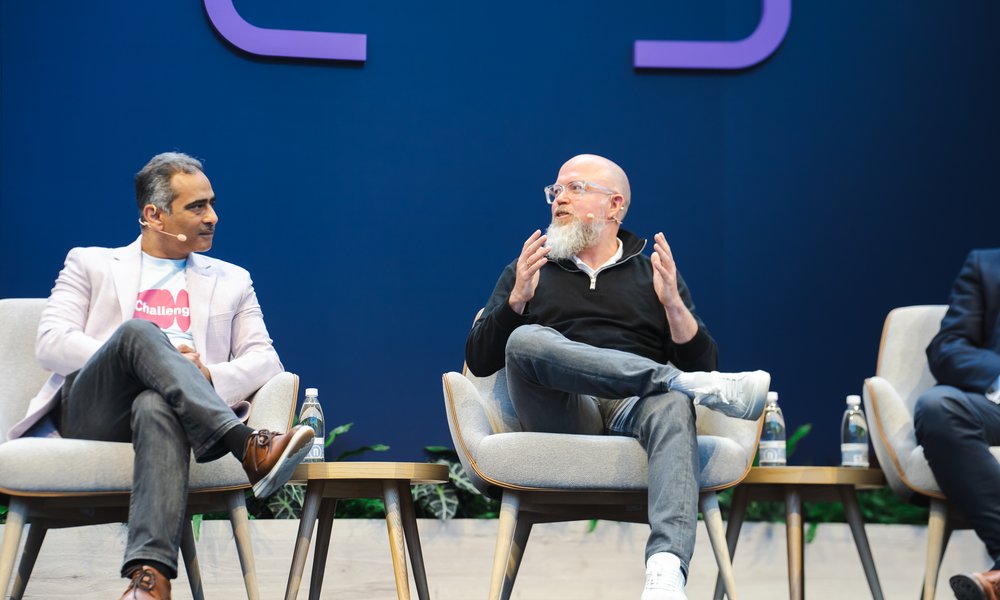
Telstra’s Krogh Andersen calls for network autonomy rethink
Kim Krogh Andersen, Group Executive Network, Product and Technology, Telstra, urged communications service providers (CSPs) to rethink the scale at which they are rolling out autonomous networks during the opening keynotes of the second day of DTW Ignite.
“We need to fundamentally change how we do stuff. We need each of the [network] domains to get to a certain level [of autonomy],” he said.
The aim is to reach a point where CSPs can “use intent to create an experience that we can monetize when we reinvent the business model with a different currency than download.”
In particular, he advised his fellow CSPs to move beyond adopting short term autonomous network use cases.
“I'm a little bit against hunting short-term use case benefits,” said Krogh Andersen. “I believe in fundamental, foundational changes. If you go after use-case-by-use-case, being super pragmatic, guess what? Then we're in the same mess 10 years from now.”
He pointed to the fact that AI is already changing customer behavior and requirements.
“Everyone has an agent running on the phone today. We need to understand the characteristic of that. We need to provide a network that can deliver that. We need to monetize that.”
He advises telcos to focus on putting in place the foundations for autonomous networks that will enable new services, with an emphasis on data.
“We need to get the data foundation in place, the data products in place, we need to get to the semantic layer,” claimed Krogh Andersen.
Telstra started working on network-as-a-service as far back as 2018. In tandem the company built and deployed a service-based IT architecture, called Telstra’s Reference Architecture Model (TRAM). Based on TM Forum’s Open Digital Architecture, TRAM now extends from IT through to data and networks.
In June 2025 it launched Adapative Networks for enterprise customers. It exposes network connectivity in a programmable fashion to customers.
“We have thought [in the past] about the network as something static with a price tag on top,” said Andersen.
However, “if you think about the network as a product, you also think about it in a much more commercial aspect, and you think about it with a software mindset as well.”
Essential to building new services is developing “data products from each of the domains. We need each domain to move from [AN level] two to four,” said Krogh Andersen.
He recommended that CSPs move beyond individual autonomous network operation use cases and start to identify and put in place end-to-end processes in areas such as planning or fault management.
George Glass, CTO, TM Forum, agreed that telcos can benefit from going beyond point solutions and implementing autonomous operations that extend across the business.
TM Forum members developed “50 [high-value] scenarios to give us a bite-sized step-by-step approach to the transformation … to get a start to prove the concept. We've done that,” said Glass.
“We have seen people take IP fault management or customer complaint handling and transform it by not 5% but by 30% and 40%,” explained Glass. “We need to join up fault management right across your organization, doing wall-to-wall fault management across all technologies and all domains of your architecture and your network, that's what we call an autonomous flow.”